
In recent years, Google Ads has become increasingly dependent on data quality. Automated bidding, budget allocation and optimisation decisions all hinge on one thing: reliable conversion signals.
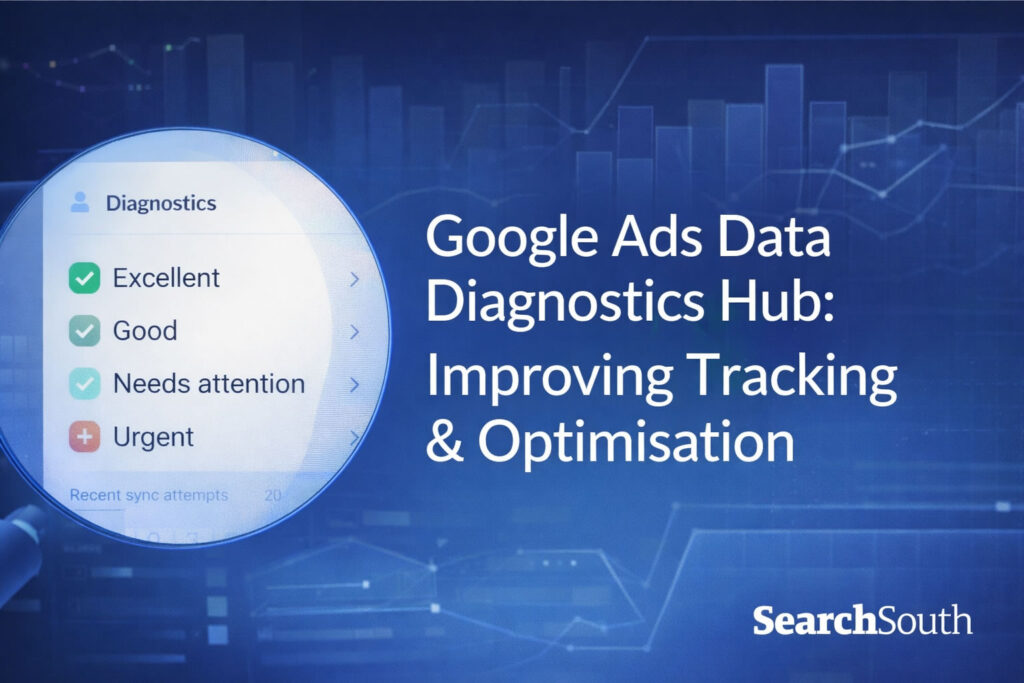
Against that backdrop, Google has introduced a new diagnostics hub for data connections within Google Ads. It’s not a flashy update, but it addresses one of the most common (and costly) problems advertisers face — broken or unreliable tracking.
The Hidden Cost of Poor Data Connections
Most advertisers assume that if campaigns are running, everything must be working as intended. In reality, data issues often sit quietly in the background.
Conversion tracking can degrade for all sorts of reasons:
- website changes that disrupt tags
- consent or privacy updates
- CRM or offline conversion imports failing
- permissions or API connections expiring
When this happens, campaigns don’t necessarily stop performing — they just start optimising against incomplete information. Over time, that can lead to rising costs, unstable results and decisions based on misleading data.
Until now, identifying these issues often required manual checks, troubleshooting across multiple tools, or waiting until performance dropped enough to trigger concern.
What the Diagnostics Hub Does
The new diagnostics hub brings visibility to this problem by centralising the status of key data connections inside Google Ads.
Rather than hunting through different menus or external tools, advertisers can see:
- whether conversion data is flowing correctly
- if imports are failing or delayed
- when connections need attention
- how recently data sources have synced
Issues are flagged clearly, making it easier to spot potential problems before they have a material impact on campaign performance.
For accounts using advanced setups — such as offline conversions or CRM integrations — this kind of oversight is particularly valuable.
Why This Matters More Than Ever
As Google Ads has leaned further into automation, the platform has become less forgiving of weak signals.
Automated bidding strategies rely on consistent, accurate conversion data to learn effectively. If those signals are incomplete or distorted, the system optimises in the wrong direction — often without any obvious warning.
The diagnostics hub doesn’t fix tracking issues on its own, but it does make them harder to miss. That’s a meaningful shift, especially for advertisers who rely heavily on automated strategies.
Good data doesn’t guarantee good performance, but poor data almost always guarantees inefficiency.
Making It Part of Ongoing Account Management
This tool works best when it’s treated as part of regular account hygiene, not a one-off check.
Building a habit of reviewing data health alongside performance metrics can help:
- catch issues early
- maintain confidence in reported results
- avoid overreacting to performance changes caused by tracking failures rather than campaign quality
In many cases, fixing a data issue delivers more improvement than tweaking bids, budgets or creatives.
A Broader Signal from Google
While the diagnostics hub itself is relatively simple, it reflects a wider direction of travel.
Google Ads is increasingly designed around automated systems making decisions at scale. As that continues, tools that help advertisers understand and protect the data feeding those systems become more important, not less.
This update suggests Google recognises that visibility and accountability around data connections need to improve — particularly as setups become more complex.
Putting Solid Foundations In Place
The diagnostics hub won’t transform performance overnight, and it’s not something most advertisers will interact with daily.
But it reinforces an important point: strong performance starts with solid foundations. No amount of optimisation can compensate for broken or unreliable data.
For advertisers who want consistent, scalable results from Google Ads, keeping a close eye on data health is no longer optional. It’s part of running the channel properly.